What Is a Giclée Print? A Collector's Guide
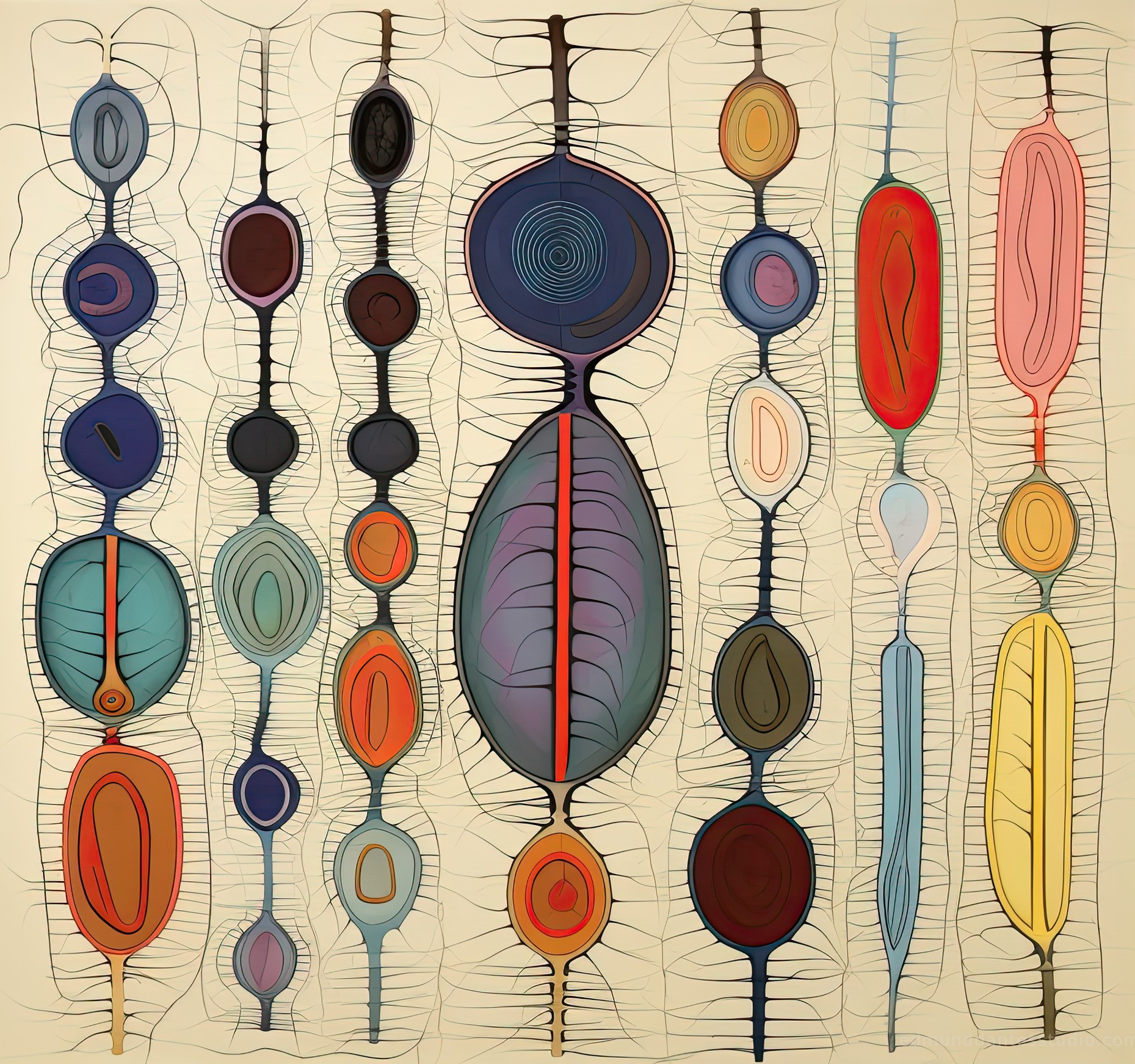
Giclée is a word doing an unusual amount of work. It appears on gallery labels, on auction listings, and on a good deal of merchandise that has no business using it. This guide explains what the term actually describes, how to tell a real giclée from a printout with ambitions, and what a collector should check before buying one.
The Word Itself
Giclée (pronounced zhee-clay) comes from the French gicler, to squirt or spray. It was coined in the early 1990s by the printmaker Jack Duganne, who needed a term for high-resolution inkjet output that did not sound like office equipment. The etymology is honest enough — an inkjet head does spray — but the name has since drifted well beyond its original meaning.
This matters commercially. There is no certifying body, no registry, and no legal definition. A seller may print the word on anything. The collector's task is therefore not to look for the label but to look for the three conditions the label was invented to describe.
The Three Conditions of a Real Giclée
1. Pigment inks, not dyes
A genuine giclée is printed with pigment-based archival inks — finely ground solid particles suspended in a carrier, laid down by a professional multi-channel printer. Pigment sits on and within the paper fibre and resists light. Independent accelerated-ageing tests routinely rate quality pigment-and-paper combinations well past a century under normal display conditions.
Dye-based inks, by contrast, dissolve into the sheet and fade measurably within a few years, faster near a window. If a seller cannot tell you which of the two they use, assume the cheaper answer.
2. Museum-grade paper
The substrate does at least half the work. Archival papers are acid-free and lignin-free, so they neither yellow nor embrittle. Limited editions from this studio are printed on Hahnemühle Photo Rag 308gsm — a heavyweight 100% cotton rag sheet with a soft matte surface that holds fine linear detail without gloss. Open editions use a 230gsm archival matte, also acid-free, at a lower price point.
Weight is a useful shorthand. Poster stock runs 90–150gsm on wood pulp. Anything at 230gsm or above, described as acid-free, is at least in the right category. You can read the full material specifications on the materials and sizing page.
3. Managed colour, not default colour
The third condition is invisible in the finished object and the most frequently skipped. A giclée is profiled: the file, the printer, the specific ink set, and the specific paper are calibrated together so that the sheet leaving the printer matches the artist's approved reference. Without that calibration, colour drifts between paper batches and ink sets, and what arrives is an approximation of the file rather than the work.
Mass-produced posters use offset lithography optimised for speed. Under a loupe you will find a rosette dot pattern; a giclée shows continuous, near-photographic tone. We covered this comparison in more depth in fine art prints versus posters.
Why the Process Suits This Work
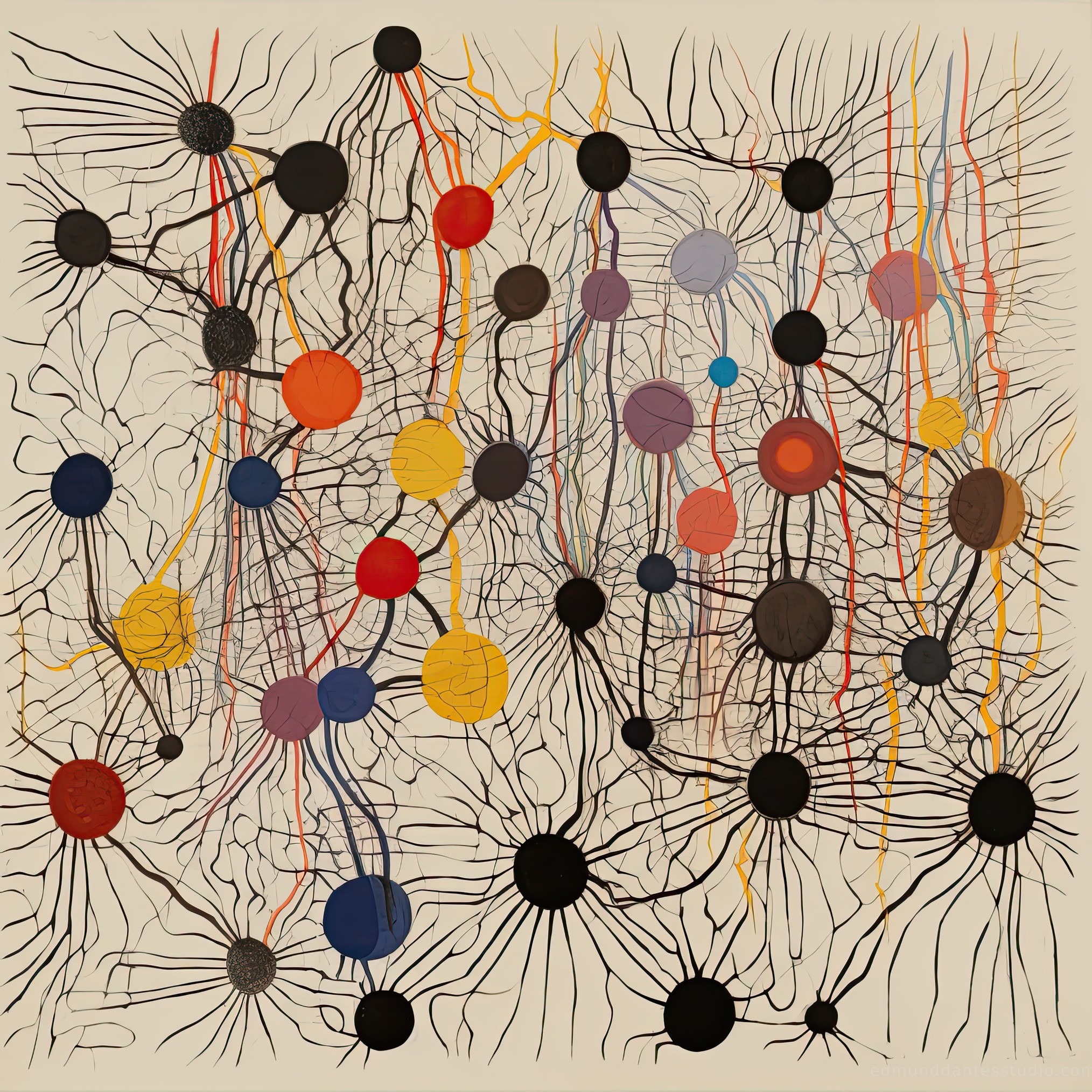
Edmund Dantes' images are built from two things that punish cheap reproduction: hairline linear networks and large fields of flat saturated colour. The filaments that thread through the Venini Network series are, in places, a fraction of a millimetre wide. Offset printing breaks them into dots. A wide-format Epson SureColor running archival pigment inks holds them as continuous lines.
The flat colour presents the opposite problem. A broad field of cadmium red or ultramarine will band visibly — show faint horizontal stripes — on any system with an inadequate gamut. The extended ink sets used in giclée printing exist largely to solve this, which is why the luminous overlapping discs of Synaptic Lanterns survive the translation from screen to sheet at all.
Put plainly: for geometric abstraction and colour-field work, the printing method is not a footnote about quality. It determines whether the image arrives intact.
What to Check Before You Buy
Six questions separate a fine art print from an expensive poster. A serious seller will answer all six without hesitation.
- What paper, by name and weight? "Archival" alone is marketing. "Hahnemühle Photo Rag 308gsm" is a specification.
- Pigment or dye inks? There is no acceptable vague answer.
- What is the edition size, and is the print numbered? Limited editions here are fixed at 100 and numbered on the sheet.
- Is there a Certificate of Authenticity? It should name the work, the edition size, and the specific number.
- What sizes are offered, and are they cropped? A square work should stay square at every size.
- How is it packed? Rolled in a rigid tube with acid-free interleaving, or flat-packed with corner protection.
Sizes, Editions, and What You Actually Receive
Prints here are offered at six sizes measured on the longest side — 12", 16", 20", 24", 28", and 32". Most of the works are square, so those read as 12×12 through 32×32 inches; a few are built to an 8:10 ratio — Synaptic Lanterns #1 and #2, and Cold Comfort #1 — and finish at 26×32 at the largest size. The artwork pages open at 12", which suits a desk or a narrow hall; 20" is the workhorse for a single wall; 28" and 32" are for rooms where the print is the event rather than a companion to it.
Each work is available as a limited edition of 100, numbered and accompanied by a Certificate of Authenticity, or as an open edition on archival matte for those who want the image without the edition apparatus. A piece such as Nervous Excitability #1 — a lattice of columnar cells held in a filament mesh — shows the difference clearly at larger sizes, where the finest lines either survive or do not.
Prints ship unframed and unmounted, in a durable art tube or flat packaging depending on the size. This is deliberate: framing is local, glass is fragile, and shipping a framed print internationally roughly doubles the cost of the object for no gain in the object itself.
Living With a Giclée
Archival ratings assume reasonable conditions, not heroic ones. Three habits protect the investment:
- Keep it out of direct sun. A century of lightfastness is measured under normal indoor illumination, not a south-facing window in July.
- Frame with UV-filtering glazing and an acid-free mat. The mat also keeps the sheet off the glass, which prevents the surface sticking in humid conditions.
- Handle by the edges. Matte cotton rag takes fingerprints permanently.
Do that and the print should still be worth hanging long after the room around it has been redecorated. That is the entire argument for the format.
See the process in the object
Every work in the catalogue is offered two ways: as a limited edition of 100 on Hahnemühle Photo Rag 308gsm cotton, hand-numbered and issued with a Certificate of Authenticity, or as an open edition on 230gsm archival matte. Both are pigment giclée prints made from the same file on the same printer.
The Short Answer
A giclée print is a pigment-ink print made on archival paper under individual colour control, produced to a standard that keeps the image stable for generations. The word is unregulated; the practice is not. Ask about paper, ink, edition, and certificate, and the marketing falls away from the object underneath.
What remains is the point of the exercise: an image that reaches you the way the artist approved it, and stays that way long enough to be inherited.

Edmund Dantes Studio
Abstract and geometric limited editions
The studio produces numbered giclée editions of Edmund Dantes' networked, biomorphic, and hard-edge abstractions, printed on museum-grade cotton paper and priced for serious but non-specialist collectors.
First Access to New Editions
Subscribers see new work before it reaches these pages, and get offers kept to the list.