Limited Edition vs Open Edition Prints: What Collectors Should Know
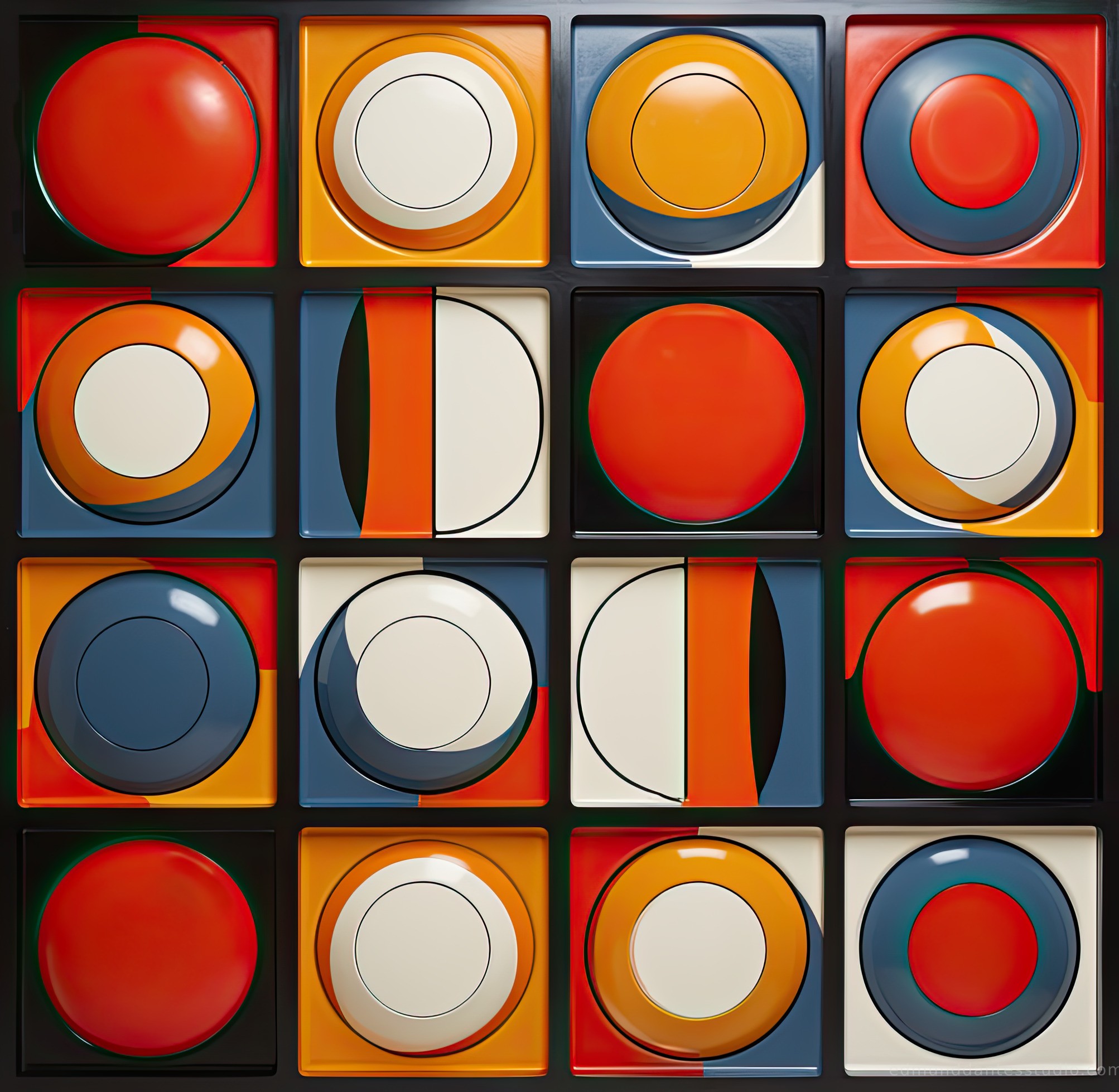
Two prints of the same image, made on the same printer, can differ in price by nearly a factor of two. The difference is not the ink. It is a decision about how many will ever exist, and whether the studio has bound itself to that number in writing. Here is what that decision actually changes.
What an Edition Actually Is
An edition is a promise about scarcity. When a studio declares an edition of 100, it is stating that 100 prints of that image at that specification will be produced and no more — and that once the hundredth is sold, the plate, in the old language, is struck. The promise is only as good as the studio keeping it, which is why the paperwork matters more than the adjective.
An open edition makes no such promise. The image is reprinted as demand requires. This is not a lesser object in any moral sense; it is simply a different transaction. You are buying the image, not a position in a finite sequence.
The Limited Edition
Limited editions from this studio are fixed at 100 prints per work. Each sheet is numbered — 15/100, and so on — and ships with a Certificate of Authenticity naming the work, the edition size, and that specific number. They are printed on Hahnemühle Photo Rag 308gsm, a 100% cotton rag paper that is acid-free, lignin-free, and heavy enough to hold its own shape in a frame.
Three things follow from that specification.
- The object is documented. The certificate is what makes the print resellable, insurable, and inheritable as a discrete item rather than as decor.
- The surface is better. Cotton rag renders fine linear detail and deep flat colour with a matte softness that lighter papers flatten. On work built from hairline filaments, this is visible at arm's length.
- The supply ends. When the run closes, no further prints are made at that specification. Whether that matters to you is a question about your intentions, not about the artwork.
The Open Edition
Open editions are printed on archival matte paper, 230gsm and 9.5 mil, smooth and neutral-white. It is acid-free and takes pigment ink well; it is genuinely a fine art paper, just a lighter and less expensive one. There is no number on the sheet and no certificate, and the print can be reproduced whenever someone wants one.
This is the honest option for a large wall, a rental, an office, or a room whose future is uncertain. It is also, quietly, the sensible way to test whether you actually want to live with an image before committing to the edition version at a larger size.
What Scarcity Does and Does Not Do
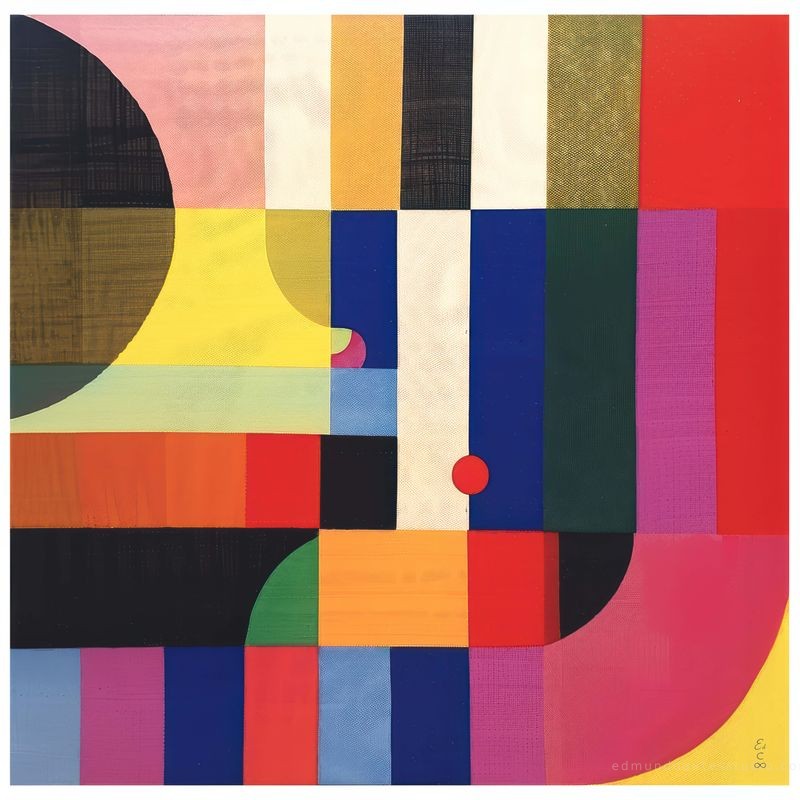
It is worth being direct, because a great deal of print marketing is not. A limited edition does not guarantee appreciation. Scarcity is a necessary condition for a secondary market, not a sufficient one; the sufficient condition is demand, which depends on the artist, the work, and time. Anyone promising otherwise is selling a financial product they are not licensed to sell.
What the edition reliably provides is a documented object with a fixed identity. That has real consequences — it can be catalogued, valued, insured, gifted, and passed on — and those consequences are worth paying for on their own terms, without a speculative story attached.
There is also a quieter argument. Numbering changes how a print is treated. A certified 23/100 tends to get framed properly, hung thoughtfully, and kept out of the sun. The paperwork produces care, and care is what actually preserves the object.
A Note on Artist's Proofs and Renumbering
Two terms cause confusion. An artist's proof (AP) is a print held back from the run, historically for the artist's own use; APs sit outside the numbered sequence and are typically few. A print described as being from a second edition or a reissue should raise a question: if the first edition was genuinely limited, what exactly is the second one? A reputable studio will either not do this or will make the distinction unmistakable on the certificate.
Choosing Between Them
| Limited Edition | Open Edition | |
|---|---|---|
| Run size | Fixed at 100, numbered | Unlimited |
| Paper | Hahnemühle Photo Rag 308gsm cotton | Archival matte 230gsm |
| Documentation | Certificate of Authenticity | None |
| Resale | Possible; never guaranteed | Not the point |
| Best for | A wall you intend to keep | Scale, budget, or a trial run |
A practical rule: choose the limited edition when the print is going on a wall you expect to still care about in ten years, and choose the open edition when the wall is provisional or when size matters more than status. Both are printed with the same pigment inks by the same process — the giclée method is explained in full in our guide to giclée printing.
Size Interacts With the Decision
Prints are offered at six sizes on the longest side: 12", 16", 20", 24", 28", and 32". Most of the works are square, so that gives 12×12 through 32×32 inches; the few built to an 8:10 ratio — Synaptic Lanterns #1 and #2, and Cold Comfort #1 — finish at 26×32 at the top of the ladder. Price rises with area, so the gap between a limited and an open edition widens as the print grows.
The result is a genuine trade-off rather than a marketing ladder. At 32 inches an open edition puts real presence on a large wall at the lower tier's price. Take one of the square works at 20 inches: $174 for the open edition against $300 for the numbered — a real gap, and the honest question is not which print is better but how long you expect to keep the wall. The three 8:10 pieces come in lower at that size — $157 against $266 — because 16×20 is less paper than 20×20.
Work in the hard-edge and op art registers rewards the larger sizes especially, because the optical effects depend on the eye travelling across the surface. The calibrated grids of Tactility and the interlocking closed field of No Exit both change character above 24 inches; No Exit #1 in particular stops reading as a pattern and starts reading as architecture.
Both editions, one catalogue
Every work is offered as a numbered limited edition of 100 on museum-grade cotton paper, or as an open edition on archival matte. Choose the edition and size on any artwork page.
The Decision, Reduced
A limited edition buys a documented, finite object on heavier paper. An open edition buys the same image, well printed, without the paperwork or the ceiling. Neither is a mistake; the mistake is paying limited-edition prices for a print with no number, no certificate, and no stated run size.
Ask for the edition size and the certificate before you buy. If both answers are clear, whichever you choose will be the right one.

Edmund Dantes Studio
Abstract and geometric limited editions
The studio produces numbered giclée editions of Edmund Dantes' networked, biomorphic, and hard-edge abstractions, printed on museum-grade cotton paper and priced for serious but non-specialist collectors.
First Access to New Editions
Subscribers see new work before it reaches these pages, and get offers kept to the list.