For the trade
Trade & interiors
Trade & Projects | Art for Offices, Hotels & Commercial Spaces | Edmund Dantes Studio
Portfolio Trade & Projects Contact
Trade & Projects
Series Installations
for Architecture
Practical information for designers, architects, and project teams considering Edmund Dantes works for larger spaces — offices, hospitality interiors, and public circulation areas where repetition and visual coherence matter.
50+ Works Available
12″–36″ Size Range
100 yr Archival Rating
Free US & Canada Shipping
The Work
Series in Architectural Space
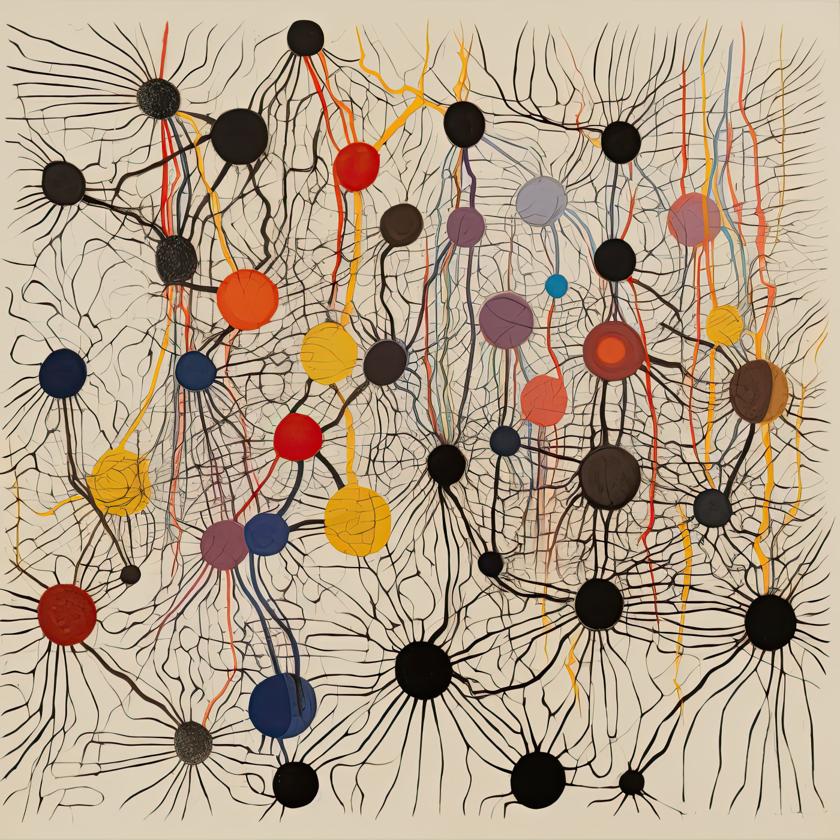
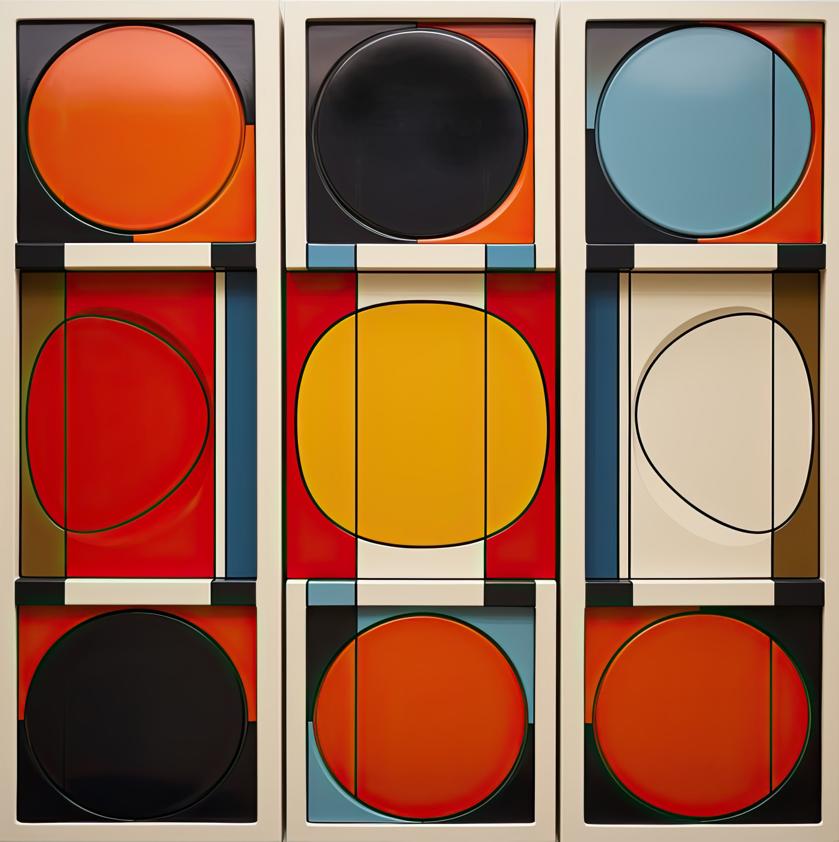
Much of the studio’s work is conceived in families rather than isolated images: sequences of neural networks, grids, lanterns, gratings, and architectural fields. Installed as small constellations — three to five works in a line, a grid, or a loose drift — these series are well suited to corridors, lobbies, meeting rooms, and guest-room floors where repetition and variation matter more than a single focal point.
Color and structure are deliberately restrained: a small set of palettes and recurring geometries run through the collections, so that different works can be combined across a floor or building without visual noise. The aim is closer to a quiet, modernist backdrop than to decorative spectacle.
Production
Formats, Paper & Scale
Works are produced as archival pigment prints on museum-grade papers, with a core range of sizes from 12 inches up to 32 inches on the longest side, depending on aspect ratio. For projects, a small number of standard formats is usually chosen and repeated to keep installations calm and legible.
Where appropriate, the studio can advise on groupings, relative scale, and placement — for instance, how a set of neural network works might step down a corridor, or how a sequence of grids can articulate a lobby wall without competing with the architecture.
Manhole Series Geometric grids & architectural fields
Neural Network Series Interconnected structures & systems
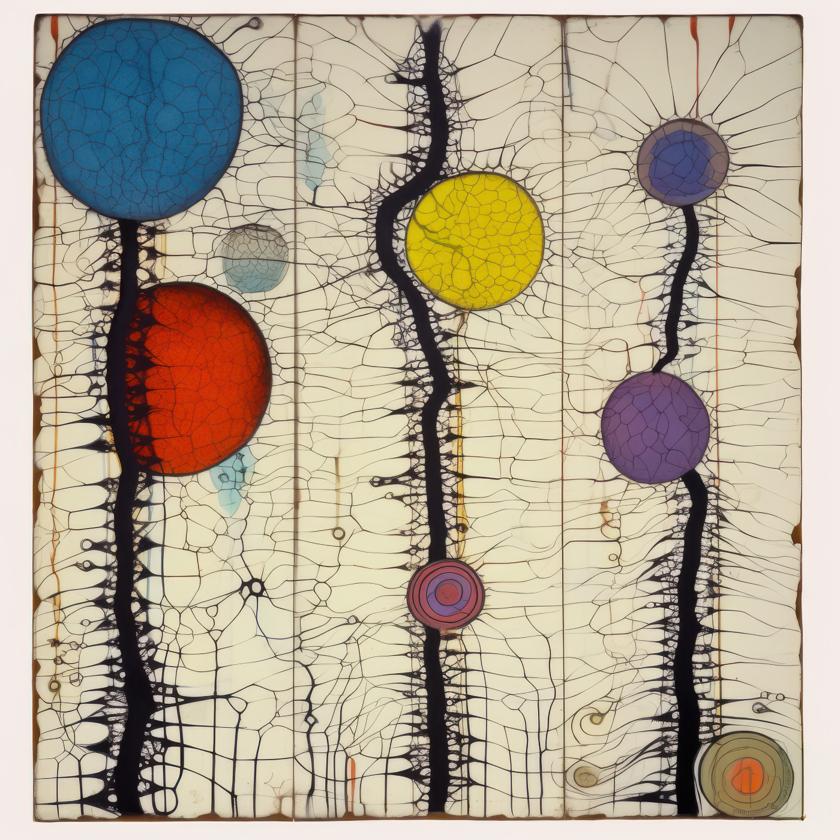
Convergence Series Minimal compositions & spatial logic
Collaboration
Projects & Collaboration
The studio welcomes conversations with interior designers, art consultants, hospitality groups, and workplace teams. Project work typically involves three areas of engagement:
01
Curation & Selection
Selecting series and individual works suited to the architecture and program of the space — considering sightlines, ceiling heights, and the circulation patterns of the building.
02
Scale & Orientation
Choosing a coherent set of sizes and orientations that repeat elegantly across multiple locations — so an installation across twenty rooms remains visually consistent without feeling mechanical.
03
Production Coordination
Coordinating with your preferred framers or local production partners where necessary. The studio does not participate in procurement negotiations but reviews proposed groupings and sequencing.
The intention is that even large installations remain consistent with the logic of the work rather than becoming generic “office art.” Edmund reviews proposed groupings personally.
Ideal for
Architecture firms Interior design studios Boutique hotels Corporate offices Hospitality groups Workplace designers Art consultants Public circulation spaces Luxury residential buildings
Also working on a vacation rental or short-term property? See the vacation rental guide for tailored recommendations.
Process
Next Steps
If you are working on a project and would like to explore using the work at scale, the most useful starting point is a brief note with the following:
01
Type of space
Office, hotel, residential building, public space — and the approximate number of locations within it.
02
Scale & quantity
Approximate number of works and typical sizes you have in mind. Even rough estimates help considerably.
03
Context & timeline
Location, projected timeline, and any existing art direction, brand guidelines, or architectural references.
What to expect
Studio Response
Initial inquiries can be sent via the contact page. A member of the studio team will follow up with a project-focused conversation and, where appropriate, a selection of series tailored to your brief.
There is no fixed timeline for project work — the studio takes a small number of projects at a time to ensure that each installation receives the attention it warrants.
Project-focused conversation, not a sales process
-
Tailored series selection for your brief
-
Placement and sequencing guidance
-
Framer and production partner coordination
-
Consistent edition structure — no “trade versions”
Start a conversation
Working on a space that deserves considered art?
Tell us about the project — type of space, scale, timeline — and we’ll put together a tailored series selection.
No procurement pressure. Studio-level conversation from the first message.
This page describes project and trade work for Edmund Dantes Studio. It does not alter the studio’s existing edition structure or the terms outlined on the prints and editions page. Works supplied for projects are identical in edition terms to works sold through the main gallery.
© 2023–2026 Edmund Dantes Studio